Research and Monitoring
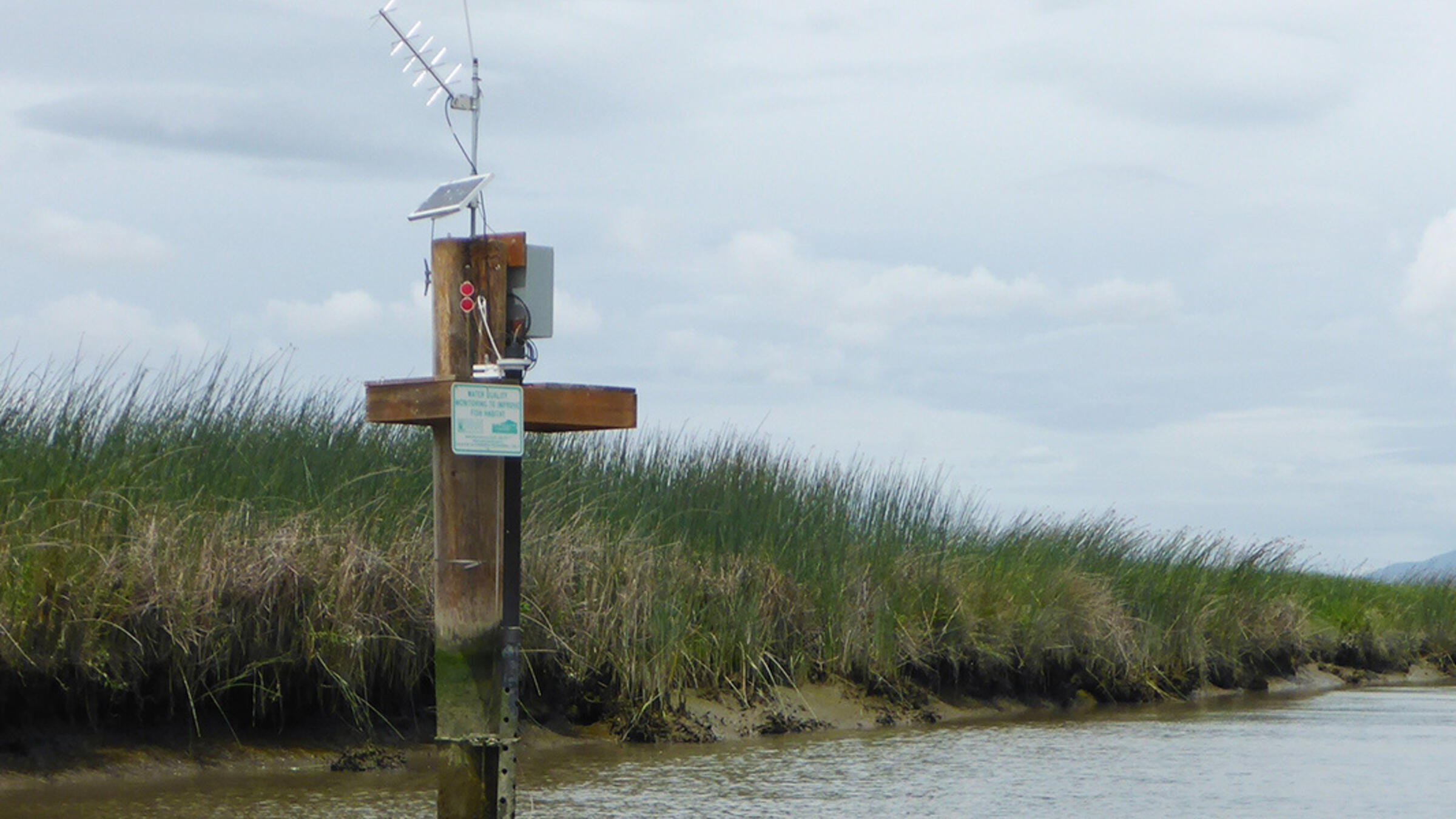
System Wide Monitoring Program
Long-term monitoring is essential to understanding ecosystems and placing shorter-term research into context. In an estuary, water-quality and weather data are especially important. The National Estuarine Research Reserve System conducts high-quality, standardized monitoring at each of the National Reserves.
We conduct long-term monitoring and research and work with the Solano Land Trust and California State Parks to coordinate external scientific research in Rush Ranch and China Camp. We can provide scientists working within the reserves with monitoring data, site knowledge, and connections to science translators to assist with communicating about research. Permits are required to conduct research at both sites. Contact Research Director Matt Ferner.
Real Time Data Application
For a quick check on current conditions, the Real Time Data Application provides the latest data in a dashboard format. The display will update automatically with the latest information as it comes in. Available water quality stations are SFBFMWQ (First Mallard), SFBSMWQ (Second Mallard), SFBCCWQ (China Camp), SFBGCWQ (Gallinas Creek), and the available weather station is SFBRRMET (Rush Ranch).
Highlighted Research
Research activities are focused primarily at China Camp and Rush Ranch through implementation of the System-Wide Monitoring Program. Additional effort is focused on estuarine areas immediately adjacent to the Reserve sites through expanded vegetation mapping around both sites, measurement of suspended sediment concentrations in nearby waters, and oyster monitoring along the Marin County shoreline south of China Camp.
Researchers from San Francisco Bay and Elkhorn Slough NERRs, UC Davis, and Smithsonian developed a collaborative research project to study population dynamics of native oyster populations in both estuaries and develop tools to guide selection of future restoration sites.
The research team measured water-quality parameters as well as oyster recruitment and growth at sites throughout both estuaries, and conducted laboratory experts to better understand native oysters’ tolerance to changing salinity and temperature.
You can learn more about this project and download the final report at http://oysters-and-climate.org.
This project spurred long-term monitoring of water-quality and oyster recruitment and growth along the Marin County shoreline, including a citizen science monitoring program in cooperation with Redwood and Tamalpais High Schools.
Lead Scientists
Dr. Matt Ferner, Research Director, San Francisco Bay NERR
Dr. Kerstin Wasson, Research Coordinator, Elkhorn Slough NERR in collaboration with other scientists from UC Davis and SERC
“Mud on the Move” is testing methods for monitoring suspended sediment concentrations above the marsh surface at both China Camp and Rush Ranch, as well as in NERR sites in Mississippi and South Carolina.
The project aims to develop a feasible and accurate monitoring protocol to collect data needed to improve accuracy of marsh sustainability models.
Learn more about this project on the NERRS Science Collaborative website.
Lead Scientist
Dr. Matt Ferner, Research Director, San Francisco Bay NERR