Municipal Waste at SFSU
Municipal waste at SFSU refers to waste generated by the daily activities and operations of the university community. This waste includes non-hazardous materials, such as food scraps, paper, plastics, packaging, and general refuse produced by students, faculty, staff, and university facilities. The characteristics of municipal waste involve its non-hazardous nature, regular generation, and the need for proper collection and disposal to ensure a clean and safe campus environment.
Examples of appropriate waste containers
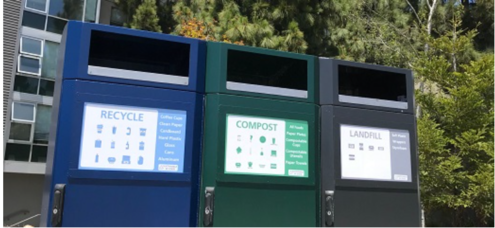
Examples of correct labels
Correct labels for municipal waste containers should indicate the type of waste they are intended for, such as "Recyclables," "Food Waste," or "Landfill Waste." Clear labeling helps ensure proper sorting and disposal.
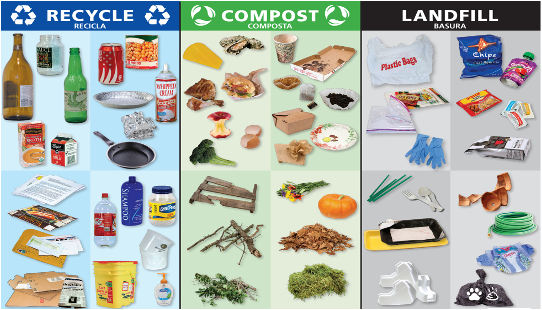
Municipal Waste Information
Examples of municipal waste at SFSU include:
- Food waste and scraps from dining facilities and campus eateries.
- Paper and cardboard from classrooms, offices, and common areas.
- Plastics, glass, and aluminum containers.
- General refuse, such as non-hazardous waste materials from various sources on campus.
Custodial Services and Waste Management Service Request
Email: facilities@sfsu.edu Telephone: (415) 338-1568 or (415) 405-0579
The accumulation time for municipal waste at the point of generation is generally short, and waste should be collected and disposed of regularly to maintain a clean and sanitary campus environment. Specific guidelines for accumulation times may be set by local sanitation regulations
Municipal waste at SFSU is typically removed by Facilities Services employees from the Waste Management department.
Waste Management collects municipal waste daily throughout campus and the waste disposal vendor comes every 9 business days.
Once municipal waste leaves university property, it is transported to local facilities, including landfills or recycling centers. Recycling facilities process recyclable materials, while non-recyclable waste is typically disposed of in an environmentally compliant manner to prevent harm to the environment. Responsible municipal waste management practices support sustainability and contribute to a cleaner and healthier campus.
Contact Information
For further information about the Municipal Waste Management Program at SFSU or how you can get involved, please contact:
Dipak Janda
- EHS Professional IV