About the Creative Writing Department
By studying elements of craft, process, vision and revision, you will be prepared to become practicing creative writers and often teachers, professors, editors, publishers, translators and arts organization professionals as well. We wish to instill confidence in you to remain in the field and continue your commitment and contribution to the literary arts.
Our Creative Writing program was established in 1955 as part of the English Department and founded in 1968 as the Creative Writing Department. We offer B.A., M.A. and MFA degrees and a minor. Our curriculum reflects our commitment to a variety of styles, subjects and approaches, recognizing the complexity and breadth of contemporary writing. By the time you graduate you will have gained expert literary analysis skills and developed your craft to constructively critique your own work and that of others. You’ll be prepared to participate in the larger community of writers with innovative writing in all genres.
We are honored to be associated with The Poetry Center and American Poetry Archives at SFSU. Internationally known, the center augments our programs, sponsoring about 50 visiting writers per year on campus and at venues throughout the Bay Area. We are also proud of Greenhouse, our innovative partnership with Z Space and SFSU’s School of Theatre and Dance, presenting staged readings of student-written plays every year.
Diversity, Equity and Inclusion
Anti-Racist Practices and Community Inclusion
As part of the social justice mission of San Francisco State University, the Department of Creative Writing centers anti-oppressive, anti-racist pedagogies and practices. All of our individual and collective identities, differences, similarities and intersectionalities bring opportunities for discussion, learning and radical empathy in the classroom. We of the SFSU Department of Creative Writing are committed to the proliferation and visibility of BIPOC and LGBTQ+ voices and perspectives. We welcome discussions about how writing and literature can actively serve to create empathy and dismantle damaging power structures, hierarchies, stereotypes and other dehumanizing forms of marginalization that exist in society. We strive to create a departmental environment free of racism, anti-Blackness, colorism, Islamophobia, antisemitism, sexism, heterosexism, transphobia, fatphobia, ageism, ableism, classism, xenophobia, prejudice against immigrants of any status or any other discrimination. This statement is not geared toward censoring what we read or write, but rather toward working together to create the world we envision through our writing and through the community we foster in the classroom.
Support Our Asian American Community
With the rise of Anti-Asian hate and violence during the pandemic, we know members in this community have been feeling fear, sadness and anger. Many have also expressed feeling isolated. Knowing there is so much our students are feeling, we offer you some resources that can get you involved to stop AAPI hate.
Before our break, there was a murder of 8 individuals in Atlanta -- a horrific act of racialized misogyny. Throughout the nation — and particularly here in the Bay Area — there has been a significant increase in anti-Asian hate. Between March 2020 and February 2021, 3,800 anti-Asian hate incidents occurred nationwide, according to a report by Stop AAPI Hate, with nearly 44% occurring in California, and nearly 25% taking place in the Bay Area. Many of the most heartbreaking incidents involve seniors who were beaten and even killed while walking in their neighborhoods. Nearly 70% of these incidents have targeted AAPI women.
While these attacks are recent, anti-Asian hate, racism and violence are deeply embedded in U.S. history. Federal policies such as the Page Act of 1875 and the Chinese Exclusion Act of 1882, founded on intersectional racist/sexist ideologies and fueled by “yellow peril” rhetoric, were spread by politicians and newspapers over a century ago, just as the COVID19 pandemic has been used today.
Here are ways you can support members of our SF State community and AAPIs where you live:
- Speak up and condemn anti-Asian hate, racism, and violence
- Report incidents of anti-Asian attacks to the SF State Bias Incident Education Team and on the Stop AAPI Hate website.
- Protect yourself when faced with discrimination and/or speak up for others as a bystander.
- Learn about the history of discrimination faced by the AAPI community. Watch PBS’ documentary “Asian Americans.”
- Stand in solidarity with other communities of color and white allies to combat racism and white supremacy together. Protests and marches are happening all across the U.S.
- Consider attending an ASPIRE program at SFSU.
- View this SFSU teaching resource: “Teaching in Days After Anti-Asian Violence Guide.”
Dear Students,
I am wishing you some peace during spring break in the aftermath of the recent murders in Atlanta. Sadly, we know that literature and the arts have both worked against and fed a reduction of the humanity, power and complexity of Asian and Pacific Islander women, of sex workers, of women perceived to be sex workers, of women, of immigrants and working-class women.
We need all of us to reach beyond the hurtful, familiar tropes--to labor into territories that aren't already scripted by historically oppressive and reductive structures. Please talk to your instructors and/or me if you need further resources to successfully continue your studies. You are in our hearts and minds, as are the women murdered in Atlanta and their friends and families.
Sincerely, Nona Caspers, Creative Writing Department Chair
Black Lives Matter
Dear Creative Writing Community,
As writers, teachers, and human beings, the Creative Writing faculty and I send our heartfelt support to our Black students, to Black writers in the Bay Area and beyond, as well as to the Black Lives Matter movement and conversation.
In response to the long history of state-sanctioned murder of Black people, the Creative Writing Department supports the protests in the Bay Area, across the U.S., and world. We commit to working toward anti-racism for our BIPOC and all students. Now and always.
We recognize that institutions historically were designed to support patriarchy and white supremacy, and in this light we must continue asking ourselves questions. We have a lot of work to do — we are a work in progress — and we welcome your feedback.
Some questions we must continue asking:
- How do structures, policies, practices at the University, college and department level aid and abet the system of white supremacy?
- What have we been doing and what could we do more of to recognize and dismantle entrenched policies and practices that result in anti-black racism and other forms of exclusion?
- What decisions could we make to counter the story of white supremacy?
- What are some concrete ways we can further support our Black, Indigenous and other students of color?
- What are the concrete ways we can support the Black Lives Matter movement and conversation?
We bring our ignorance, our privileges, our ongoing questions. We also bring our hearts and good will. And the three bones of the inner ear. This is an ongoing conversation, but as a starting point we renew our commitment to:
- hiring more Black, Indigenous, and people of color on as lecturers and professors, and to continue to press the University to prioritize the hiring and retention of BIPOC faculty.
- bringing BIPOC and/or LGBTQIA voices to our campus
- pressing the college and university to widen outreach to BIPOC and/or LGBTQIA students, and to ourselves buoy our efforts to mentor BIPOC undergraduate students to succeed and prepare for graduate programs.
- creating a new Creative Writing scholarship for BIPOC students.
- continuing our multi-voiced student-faculty working group to talk about pedagogy and community inclusion.
Creative Writing supports all non-violent reinventions of the world wholeheartedly. We love to vote.
I wish you well, and more well.
Sincerely,
Nona Caspers, Chair of Creative Writing
Trans Brilliance, Trans Futures: Leading Writers Speak Out
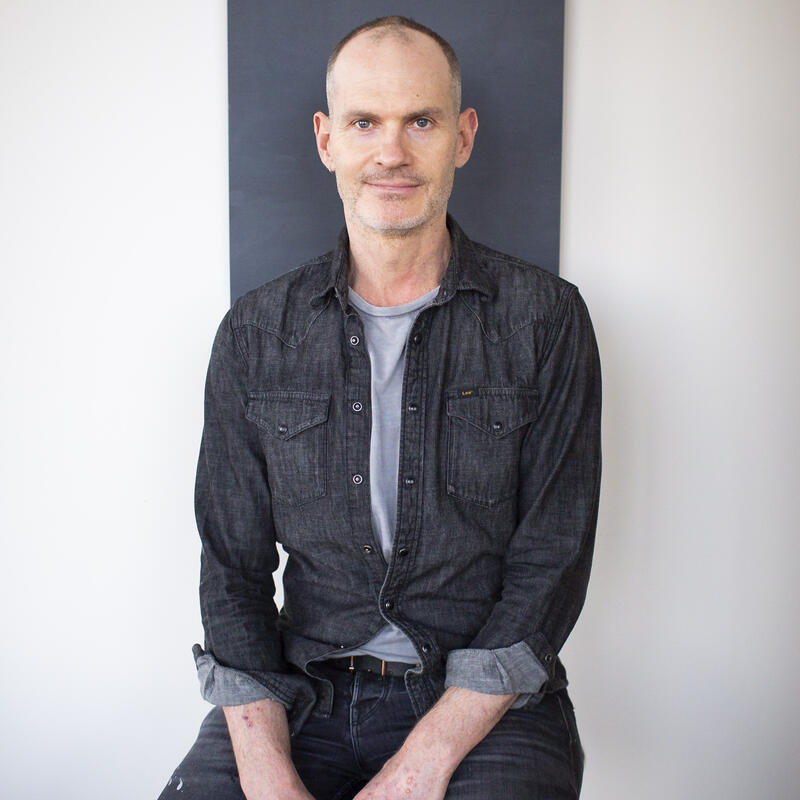
From Our Community
“I had such spectacular teachers who helped me think differently about the world I lived in. I was still working out some anger when I came to San Francisco State because of what was happening to my friends with AIDS and the government’s lack of response and funding toward research. My teachers helped me figure out positive ways to channel that frustration and injustice into an art form.”