Put on This Earth to Act
The Oscar-nominated actor reflects on his remarkable career, his transformative time at SFSU and why mentoring the next generation matters.
- By Ben Fong-Torres
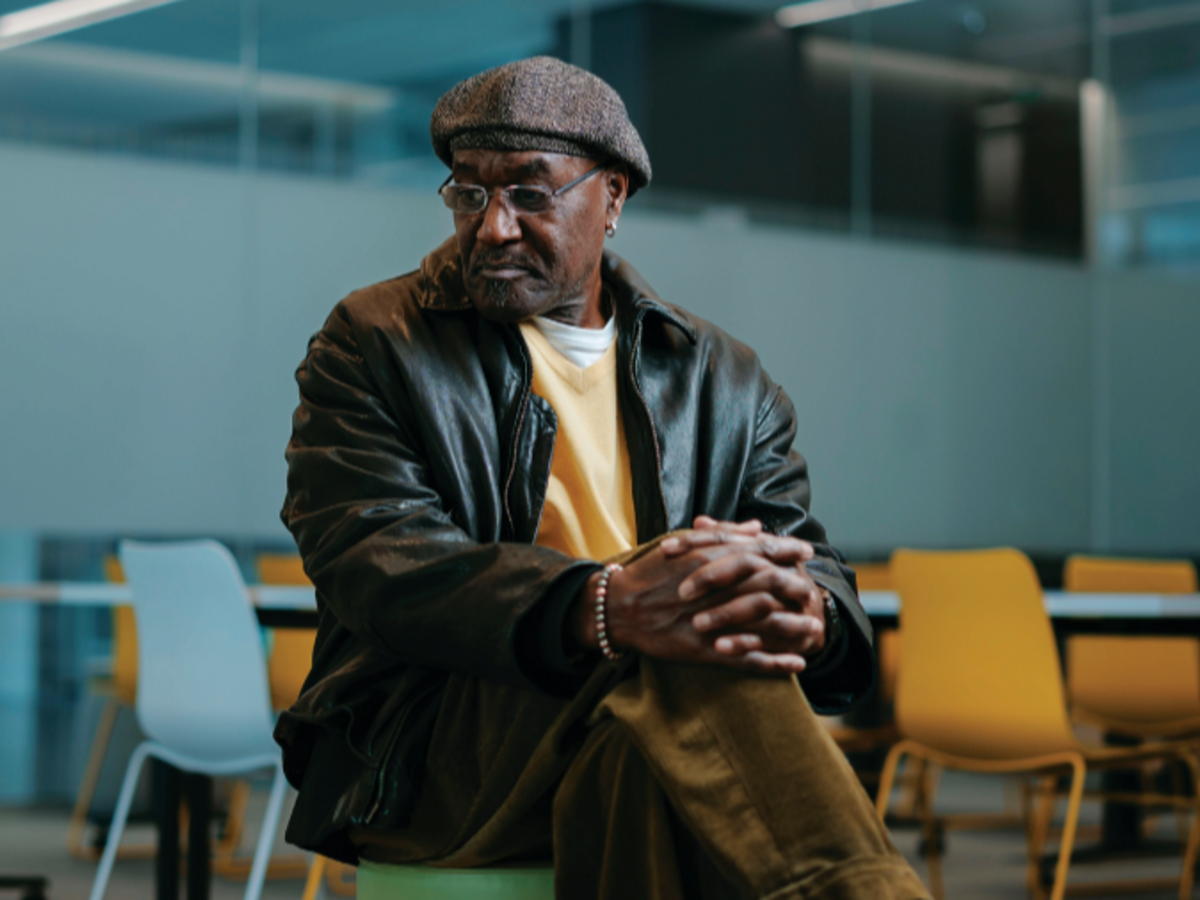
Less than two months after a mostly triumphant night at the Academy Awards, Delroy Lindo was on SFSU’s campus — again. A resident of Oakland, he’s crossed the bridge before to visit with and encourage students at his alma mater.
It was May, and he was a first-time Oscar nominee, in the Best Supporting Actor category, for his portrayal of bluesman Delta Slim in “Sinners,” the Ryan Coogler film that tallied a record-setting 16 nominations and won four.
Lindo, a 50-year veteran in theatre, film and television, with credits including “Malcolm X,” “Clockers,” “Get Shorty,” “The Cider House Rules” and “Gone in 60 Seconds,” did not win.
No matter. Besides acting, Lindo’s got a thing for education. Born in London to Jamaican parents, he grew up in the Bay Area, studied acting at the American Conservatory Theater in San Francisco in the late ’70s and worked in theatre before breaking into films. In mid-career, he attended SFSU from 2003 to 2004, earning a Bachelor of Arts degree in Cinema. In 2014, he added a master’s degree from NYU. In 2021, he was inducted into SFSU’s Alumni Hall of Fame. At Commencement this year, he received an honorary Doctorate in Fine Arts and delivered the keynote address.
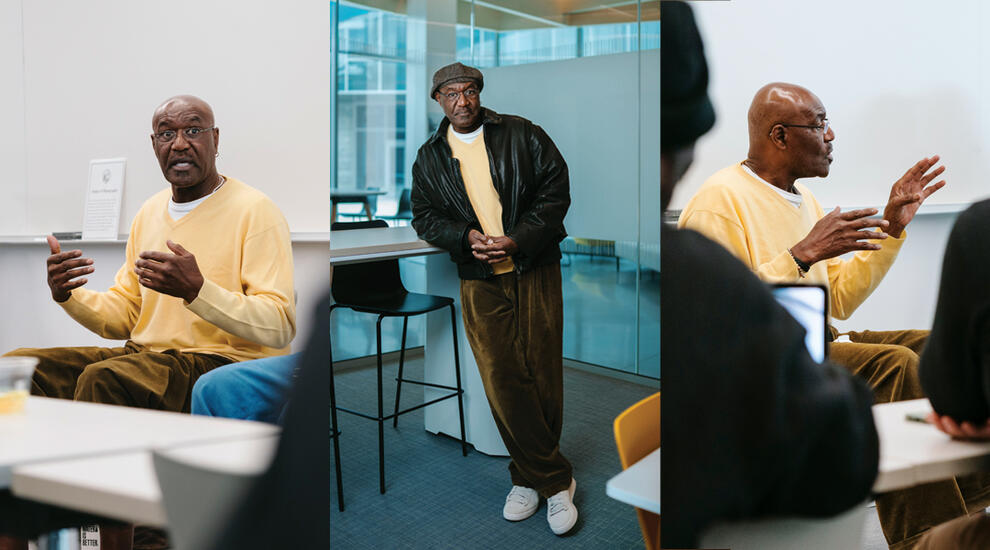
On this spring day, he met with students from the University’s Project Rebound and Guardian Scholars programs in separate sessions in SFSU’s shiny new Science and Engineering Innovation Center. Between meetings, he sat for a Q&A with SFSU Magazine.
Dressed casually in a sunshiny yellow V-neck and billowing cord pants, the 6-foot-2 Lindo looked imposing, but he was down to earth — a gentle giant. And, no matter the Oscar outcome, a winner.
It seems like there’s a mutual admiration society going on with you and SFSU. What compels you to come and visit with students?
I recognize San Francisco State to be a particular institution. And part of the mandate of San Francisco State seems to be to reach out to underserved communities, of students who may not ordinarily get the opportunity to have a college education. And that resonates very strongly for me.
Why was it that, in your early 50s and in the midst of an active acting career, you decided to attend SFSU?
I was having somewhat of a lull. I was not retiring, and I thought, OK, how can I most constructively utilize this time? At the time, my son [Damiri] was very young … and I thought I wanted to be an inspiration … a positive example. That was one aspect. My wife Nashormeh encouraged me, and also my mom, who had passed on in 1996. I wanted to get a degree to belatedly do something for her, something that I knew she would be proud of.
I believe you had an agreement with the University, to be able to do your professional work as well as your student work, right? Was there a number of units you had to complete before you earned your B.A.?
Yeah, I had to do the work, no question. I was granted some units for my professional life experience credits, but other than that, I did a full load.
You began to act when you were a child. But when was it that you really got into acting?
You’re right. I played Balthazar in a nativity play when I was 5, 6 years old. Then, in 1973 in New York, I saw a production by the Negro Ensemble Co., a revered theatre ensemble, and they had a play on Broadway, “The River Niger.” And that was incredibly impactful for me, going to a Broadway theatre, seeing Black actors on stage. I remember leaving the theatre and being energized and thinking, “Oh, maybe I can have a career as an actor.” I did my formal training at the American Conservatory Theater.
An acting career is an up and down thing. What kept you going?
What kept me going was a belief that I am put on this earth to act. It is part of my destiny.
I’ve never gotten to a point where I have seriously considered giving up. There was always enough happening for me professionally that led me to believe that I could hang in, that I could continue to work.
Can you name a career highlight or two?
I would say the three films that I did with Spike Lee back to back to back in the early to mid-1990s, which were “Malcolm X,” “Crooklyn” and “Clockers,” will always hold a special place in my heart and my soul, because they were responsible for springboarding my career. And then in 2020, Spike and I reunited to do “Da 5 Bloods.”
You gave one of the most gritty, emotional, difficult performances in your career with “Da 5 Bloods,” as a tortured Vietnam War vet. Was Spike pushing you, or did you already have that in you, and the script brought it out?
The script brought it out. Spike didn’t have to push me. Having worked with Spike, we have a certain kind of rhythm as colleagues. It was a wonderful part. I was able to, with his assistance, inhabit that character, Paul, in such a way that it was affirmed by Spike that what I was doing was supporting the story in the way that it needed to be supported.
With “Sinners,” was it clear to you, from either reading the script or beginning to act out your role, that you were in something truly special?
Yes, although I could never have anticipated the response that the film has gotten. I knew it was a very special piece of material, from the first time I read it, but I did not anticipate that it would become the critical and commercial juggernaut that it became.
Your monologue in the car, with you as Delta Slim talking about the blues, then recalling the lynching of your friend Rice, and then falling into an anguished hum, a blend of blues and gospel, and an improvised self-percussive slamming of a knee, added up to a riveting definition of the blues. What was your role in bringing that scene to cinematic life?
It was what Ryan Coogler had written. There was some improvisation. But the bones of the monologue, the fundamental structure, were in place.
Did he make you do a lot of takes?
We probably did eight or nine takes, but it was fine because all of us in the car were getting closer and closer to the emotional resonance that was in the scene. And each take that we did, I’d like to believe, was enabling, causing the scene to get emotionally richer and richer.
Physically, were you beginning to get drained by about take seven or eight?
No. If anything, it kind of inspired me to keep working.
And that percussive pounding and emotion at the end. Was that there from the first takes?
No, no, no, no, no. That last improvisational moment happened, probably on the seventh or eighth take.
Your Oscar nomination inspired a tidal wave of support for you. You obviously hoped to win, although you also said wisely that you knew there was no such thing as a sure thing.
I was pleased to get the nomination. I was and I am proud of the work. [And] I was aware that there are lots of moving parts in that aspect of the industry, with the Academy Awards campaign. So I knew that anything could happen.
How was the ramp-up for you to the Oscars? The appearances on talk shows, interviews in The New York Times….
It was terrific. I was having my profile as an actor elevated, and all of those things were very positive occurrences.
Then how was it going through the actual evening?
It was wonderful. My family was there. And I felt, to use a very overused and perhaps hackneyed phrase, it was a blessing that we could have that experience together. There’s that cliché that it’s a win just to be nominated. And that’s not not true. I know that’s a double negative, but that’s not not true. I remember one of the award shows; we were standing backstage: myself, Michael B. Jordan, Wunmi Mosaku and Myles Caton. And I remember saying, “I’ve never had an experience like this.” None of us had been in a situation of having such a huge hit entity. It was special.
With all of that support, what about the moment of announcement that Sean Penn won? People have pointed out that you did not applaud the winner.
I did do that. I’ve heard that there have been some criticisms that I didn’t applaud. I absolutely did. They removed the camera from me before I applauded. I remember I had my hand up on my face and the announcement was made, and they moved the camera away from me before I started applauding.
No matter what, it’s been a great career. Can you share an experience from it that challenged you and helped you grow as an artist?
Playing Paul in “Da 5 Bloods,” because of the magnitude of the part. It had Shakespearean dimensions. But, and this I will say for all young people: There are learning experiences in every single thing that one does. And that is absolutely true.