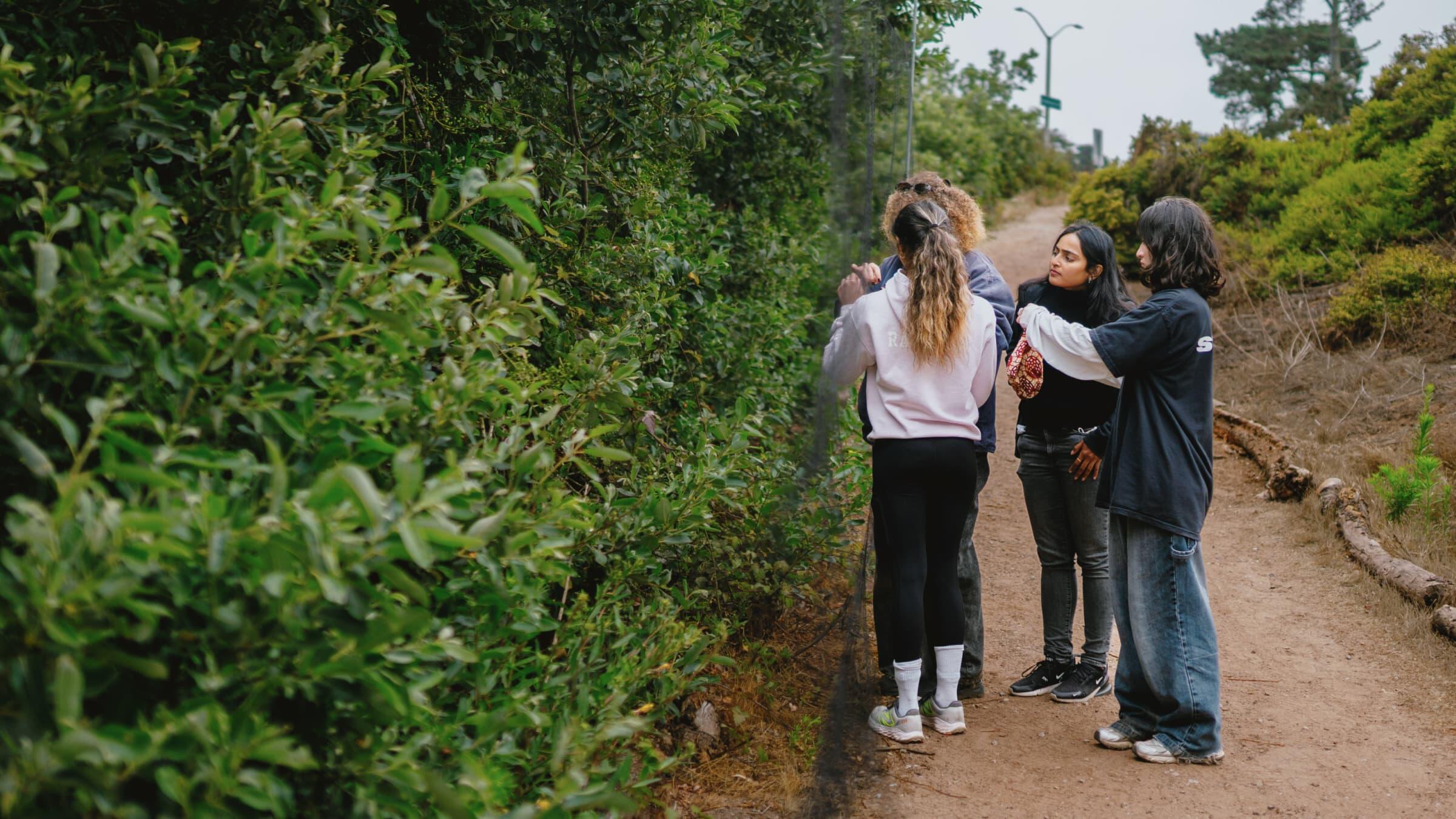
Environmental Science: Concentration in Natural Resource Management and Conservation
Bachelor of Science
About this program
The Bachelor of Science in Environmental Science: Concentration in Natural Resource Management and Conservation teaches you how to protect and manage natural systems. You’ll study ecology, conservation biology, and resource management and build skills in both data analysis and field methods. This program prepares you to solve environmental problems through science, policy and hands-on work in conservation or natural resource careers.
Program Curriculum and Requirements
Program Scope
The Bachelor of Science in Environmental Science with a concentration in Natural Resource Management and Conservation provides students with the theoretical and applied knowledge and skills in ecology, conservation biology, and natural resources they need to address natural resource management and conservation issues.
Environmental Studies emphasizes interdisciplinary approaches to understanding relationships between humans and the physical world and centers social justice. Students learn what individuals and organizations are doing and can do to protect the environment for themselves, future generations and other living beings and ecosystems. Students participate in an internship and take a senior seminar, gaining experience in community engagement and preparing for future environmental careers.
Students pursuing the B.S. in Environmental Studies deepen their understanding of ecology, conservation biology, statistics, and natural resource management and gain a solid background in both quantitative and qualitative problem-solving techniques. Students choose additional coursework in ecology, biodiversity studies, applied methods and management of specific resources.
Program Learning Outcomes
- Demonstrate understanding of the relationships between social justice and environmental problems in local, national, and global contexts.
- Demonstrate understanding of chemical, biological, and social processes related to environmental problems and the ability to integrate these with the understandings and critical evaluations of descriptive statistics commonly used in environmental literature.
- Communicate clearly and accurately both orally and in writing and be able to conduct research appropriate to the area of emphasis.
- Demonstrate a basic understanding of civic activities and processes, and of methods of engagement in those processes.
- Demonstrate readiness to enter the professional job market by preparing/training students in developing appropriate job market skills (e.g., resume and cover letter writing, interview preparation, writing well and engagingly, acquiring professional experience via internship).
- Demonstrate understanding of ecological and conservation biology theories and how they relate to natural resource management and conservation decisions.
- Demonstrate understanding of natural resource management techniques and approaches.