Biology: Concentration in Ecology, Evolution, and Conservation Biology
Bachelor of Science
About this program
The Bachelor of Science in Biology: Concentration in Ecology, Evolution, and Conservation Biology gives you a broad foundation in evolutionary biology, ecology, botany and physiology through hands-on learning. You’ll study how species and ecosystems interact and change. The program helps you prepare for graduate school or careers in environmental consulting, conservation work or public agencies. You’ll work closely with advisors to shape course choices to fit your goals.
Program Curriculum and Requirements
Program Scope
This program offers a flexible but rigorous plan of study in the organismal life sciences for students interested in ecology, evolution, natural history, and conservation biology. The B.S. in EECB is suited for students preparing for a variety of careers, such as academic research, environmental consulting, natural resource management, conservation, and sustainability.
Ecologists and evolutionary biologists are systems level biologists who study organisms and the environment around them, examining relationships and interactions between wildlife, plants, and their surrounding environment. Depending on the specific coursework that students choose, the focus of study can be customized to student interest and career goals. This program offers training in animal and plant biology through coursework in evolutionary biology, ecology, behavior, anatomy, and physiology of both vertebrate and invertebrate animals as well as plants and marine organisms.
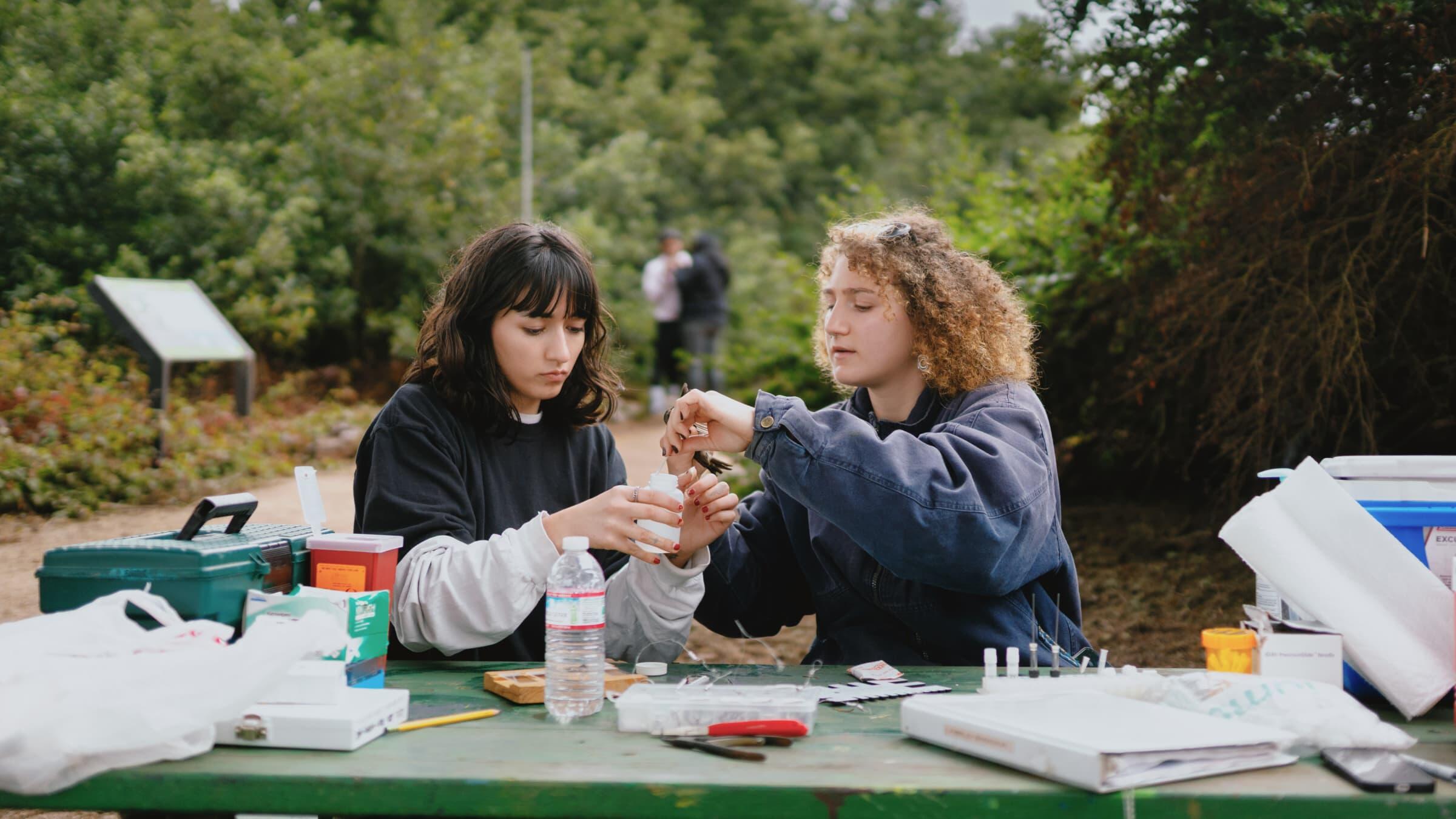
In all of our concentrations, research experiences in the labs of our world-class faculty and instructors are an integral part of student training. Hands-on experiences in our research labs, through the Biology Undergraduate Research Program (BURP), prepare our graduates for high-level jobs in industry or further training toward a higher degree.
The EECB program maintains a close association with the California Academy of Sciences, where extensive research collections of insects, invertebrates, fish, amphibians, reptiles, birds and mammals are available for a wide variety of studies by advanced undergraduate and graduate students.
Program Learning Outcomes
- UNDERSTANDING THE PROCESS OF SCIENCE: Students can design an experiment with the appropriate control groups to test a hypothesis
- QUANTITATIVE REASONING: Students can interpret a graph or dataset to determine if the results of an experiment support or reject a hypothesis
- RELATIONSHIP BETWEEN SCIENCE AND SOCIETY: Students can weigh the costs and benefits to society of the use of recent scientific and technological developments
- EVOLUTION: Students can explain the role that variation between individuals plays in the processes of natural selection and evolution.
- RELATIONSHIP BETWEEN STRUCTURE AND FUNCTION: Students can explain how a change in the structural characteristics of a molecule, tissue or organism will affect its function
- INFORMATION FLOW AND STORAGE: Students can describe the mechanisms of information flow in classical and molecular genetics and predict the outcomes of crosses
- PATHWAYS AND TRANSFORMATION OF MATTER AND ENERGY: Students can explain how a carbon molecule flows through a biological process or system
- SYSTEMS (i.e. living systems are interconnected and interacting): Students can predict the consequences of how a change in one aspect of a biological or complex system will affect other aspects of the system